G2 is the world’s largest software marketplace, with millions of verified reviews across thousands of software categories. G2.ai is the AI layer on top of this huge dataset that turns all that messy feedback into clean, easy‑to‑use business insights. Think of it as a smart G2 data tool that reads every review so you do not have to, then gives you clear answers in plain language.
Instead of downloading spreadsheets and building complex dashboards, you can ask questions in simple language and get fast summaries about products, markets, and buyers. This makes AI business insights accessible for founders, marketers, product managers, and even that one colleague who still fears pivot tables.
Main Features
1) AI‑Powered Software Advisor :G2.ai uses the G2 data tool to give fast AI business insights—clear options, no endless scrolling
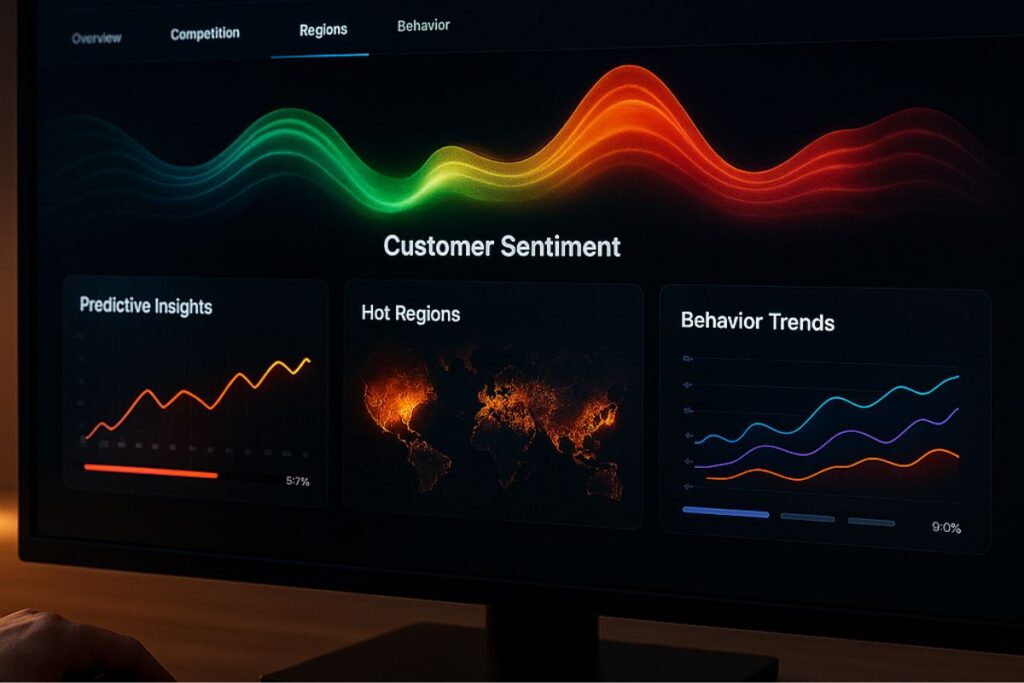
2) Deep Buyer Intent and Market Signals :G2.ai turns browsing activity into clear signals. Vendors use the G2 data tool for AI business insights on demand trends, competitor shifts, and hot regions—like night‑vision for the pipeline.
3) Voice Reviews and AI‑Assisted Review Collection : G2.ai now offers Voice Reviews and AI‑assisted collection. Call transcripts become pre‑filled G2 reviews—privacy‑safe and ready for approval. Companies get richer feedback across industries and roles, without spamming customers. More reviews power the G2 data tool and deliver sharper AI business insights.
How Does It Help?

G2.ai helps different teams in very practical ways, by turning G2 data into clear, real‑world decisions.
i) Faster, Smarter Software Choices
Instead of reading through dozens of reviews, teams can ask simple questions and get shortlists that match their needs. This saves time, reduces decision fatigue, and reduces the risk of choosing a tool that looks shiny but fails in real‑world use.
ii) Clear View of Customer Sentiment
G2.ai turns thousands of individual reviews into trends: what customers love, what they hate, and what is changing over time. Product managers and marketers get an instant feel for performance by feature, industry, and region.
iii) Stronger Go‑To‑Market Plans
The G2 data tool reveals where demand is rising, which competitors are winning attention, and which keywords and categories are gaining traction. This helps marketing teams target the right segments, craft better messaging, and time campaigns more effectively.
iv) Better Sales Conversations
Sales teams can see which companies are researching their category or product on G2, and what else they are comparing. That means more relevant outreach, smarter talk tracks, and fewer awkward “So… what are you interested in?” calls.
v) Continuous Product Improvement
By combining AI business insights with review trends, G2.ai shows product teams which features to fix first, what to highlight in roadmaps, and how to keep customers happy. It is like getting a weekly performance review from the entire market, minus the passive‑aggressive tone.
Stay ahead with our Tool of the Day—one brilliant AI or tech gem spotlighted daily to elevate your workflow. For deeper breakthroughs, our Weekly Tech & AI Update delivers trends, tips, and future-ready insights. One scroll could change your game. Go explore.
Examples that bring this to life:
1. A regional CRM vendor sees, through buyer intent data, that companies in Europe are suddenly researching its product and two main competitors. Marketing quickly spins up localized campaigns and webinars, riding the wave instead of missing it.
2. A head of IT at a manufacturing firm types a natural question into G2.ai: “What are good security tools for plants with older systems?” The advisor suggests tools that work well in hybrid environments, plus pros and cons drawn from reviews by similar companies.
3. A customer marketing manager uploads call transcripts to the Voice Reviews feature. G2.ai turns real conversations into clear, structured reviews that highlight value, which then boost social proof on the G2 profile page.
Getting Started in 3 Steps
i) Visit G2 and Explore G2.ai
Go to the main G2 website at https://www.g2.com and create or log into your account. From there, you can start exploring AI features like the advisor experience and, if you are a vendor, the seller tools and dashboards.
ii) Set Your Goal: Buyer or Vendor
If you are buying software, start by asking G2.ai simple, natural questions about your needs, budget, and use cases. If you are a vendor, connect your product profile, verify your company, and unlock access to G2 data tool dashboards for buyer intent and review analytics.
iii) Start Small, Then Go Deeper
Begin with one or two tasks, like shortlisting a tool, checking sentiment trends, or viewing buyer intent for a single product. Once comfortable, explore more advanced AI business insights, such as custom research or integrating review streams into your own systems.
Use Cases

i) Startup Choosing Its First Tech Stack
A seed‑stage startup needs a CRM, support tool, and email platform but has no time to run full comparison projects. G2.ai helps the team quickly shortlist tools for small teams, with strong support ratings and reasonable pricing, using AI business insights drawn from similar users.
ii) SaaS Vendor Tracking Competitive Shifts
A mid‑market SaaS vendor wants to know which competitors are gaining attention in its category. The G2 data tool shows rising trends, review volume, and sentiment shifts, helping the team adjust pricing, features, and marketing.
iii) Product Manager Hunting for Feature Ideas
A product manager uses G2.ai to pull common complaints and wish‑list items from reviews in their category. This turns unstructured feedback into a clear roadmap for the next two quarters.
iv) Marketing Team Planning a Campaign
A marketing team checks buyer intent signals to see which regions and industries are actively researching their product. They then plan campaigns that speak to those segments’ specific pain points, instead of blasting generic messages.
v) Customer Success Checking Health Signals
Customer success teams monitor reviews and sentiment trends to spot early warning signs, like recurring complaints about support delays or new bugs. They jump in before churn spikes, turning angry users into happy advocates.
Real‑Life Examples With a Smile

i) The “Spreadsheet Survivor”
Priya, a marketing ops lead, used to maintain a terrifying spreadsheet of martech tools and reviews. After discovering G2.ai, she retired the spreadsheet (and gave it a proper farewell in the team chat) and now runs all her comparisons in one conversational interface.
ii) The Startup That Almost Bought the Wrong Tool
A tiny startup nearly signed a three‑year contract with a fancy platform just because the sales demo had great animations. G2.ai showed that similar small teams struggled with its complexity and price, so they switched to a simpler option that fit their stage.
iii) The Sales Rep Who Stopped Guessing
Liam, a sales rep, used to send cold emails that started with, “Just checking in…” and ended in silence. With buyer intent data, he now knows which accounts are researching his product category and opens with specific, relevant context, which shocks prospects in a good way.
iv) The Product Team That Fell in Love With Reviews
A product trio turned G2 reviews into their weekly ritual. Every Friday, they review G2.ai sentiment trends, pick one “customer pain of the week,” and fix it, slowly turning their ratings from “meh” to brag‑worthy.
v) The CEO Who Finally Understood the Market
A busy CEO kept asking for “a simple one‑pager” on market position. The team plugged G2 data tool dashboards into their meetings, so now the CEO can see live scores, rankings, and AI business insights without firing off late‑night emails.
vi) The IT Manager Who Won the Budget War
An IT manager used G2.ai to prove that a new security tool had top ratings from companies in the same industry, size, and region. Finance finally approved the budget, and the manager celebrated by sending the G2 link in the team chat with a victory gif.
vii) The Agency That Looked Like a Fortune‑Teller
A small marketing agency started showing clients AI business insights from G2.ai about which tools were rising in their niche. Clients thought they had some secret crystal ball, but really it was just the right G2 data tool and a good Wi‑Fi connection.
Common Mistakes to Avoid
i) Treating AI as Magic and Skipping Judgment
Some users treat G2.ai as a final decision engine instead of a decision helper. The mistake is to accept every suggestion blindly without checking your own needs, budget, and context. AI business insights are powerful, but they work best when combined with human judgment.
ii) Ignoring the Details Behind the Scores
Another common mistake is focusing only on star ratings and ignoring detailed review themes. Two tools may have similar scores, but one might be great for enterprises while the other is perfect for small teams. Always read key pros, cons, and user segments before deciding.
iii) Not Updating Filters or Use Cases
People often forget to set filters for company size, industry, or region, so the AI mixes feedback from very different users. This can lead to advice that sounds good on paper but fails in your real environment. Always tell G2.ai “who you are” before trusting the results.
iv) Overlooking Buyer Intent as “Just a Nice Extra”
Many sales and marketing teams ignore buyer intent data and treat it as a bonus, not a core signal. That is like seeing footprints outside your shop and not opening the door. Use those signals to prioritize outreach and tailor messages.
v) Only Checking Reviews When Things Go Wrong
Some companies only open G2 dashboards when star ratings drop. The smarter move is to monitor trends regularly, so you can spot issues early and double down on what works. Think of it as brushing your teeth, not waiting for a root canal.
vi) Keeping Insights Stuck in One Team
Sometimes marketing has G2 access, but sales and product never see the data. When that happens, AI business insights do not reach the people who could act on them. Share dashboards and summaries across teams so everyone benefits.
Simple examples:
- A founder selects a project management tool just because it tops the category, without checking if it fits small teams. They later realize half the features are unused, and onboarding is painful.
- A sales manager sees buyer intent spikes but does not change outreach plans. Weeks later, a competitor wins deals from those very accounts.
- A product team ignores G2 reviews for months, then is shocked by a sudden rating drop. They could have caught the pattern earlier if they watched sentiment trends.
- A marketer never filters by industry, so they base decisions for a healthcare product on reviews from finance and retail. Unsurprisingly, campaigns miss the mark.
- A company keeps G2 access limited to one “analyst” who sends a monthly report no one reads. Once they start showing live dashboards in team meetings, decisions move much faster